Yemen and mirage of Somaliland: Sovereignty, deterrence, and battle over the Red Sea
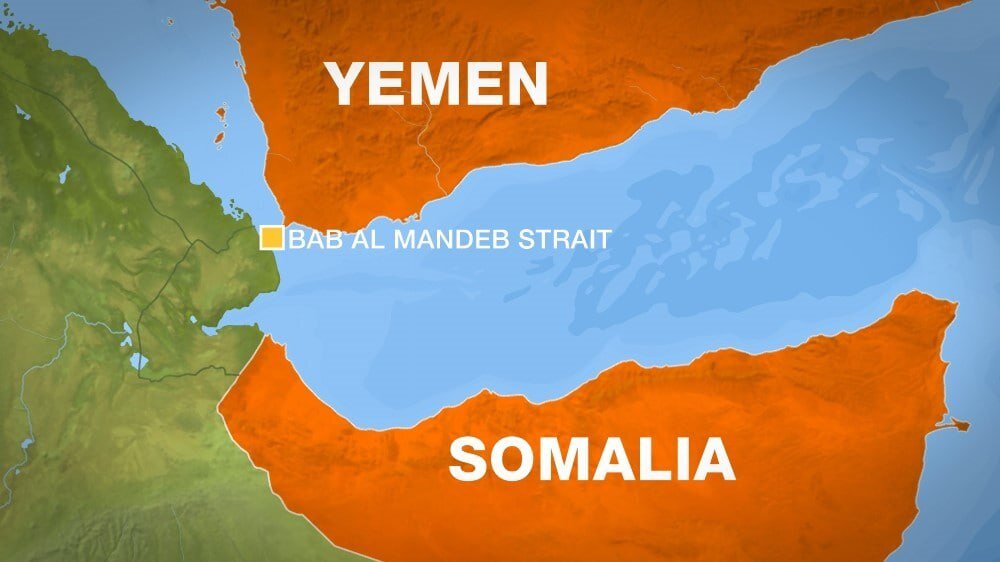
BEIRUT—The renewed focus on the so-called “Somaliland” is not an isolated African issue but a deliberate geopolitical maneuver tied to the security of the Red Sea and the balance of power in West Asia.
“Somaliland” represents a classic model of imposed fragmentation: a statelet promoted through external recognition, detached from historical legitimacy, and designed to serve foreign security interests.
Its strategic coastline, overlooking vital maritime corridors, renders it an attractive platform for hostile powers seeking leverage over the Horn of Africa and the Red Sea.
For Yemen, any such presence would collapse the distance between threat and homeland, transforming nearby shores into launchpads aimed directly at Yemeni security.
Yemen’s leadership has treated this development not as distant diplomacy, but as a direct strategic threat.
At the center of this response stands the clear and uncompromising position articulated by the leader of Ansarallah, Sayyed Abdul-Malik al-Houthi, whose recent statements signal a decisive shift from denunciation to deterrence.
Sayyed Abdul-Malik al-Houthi was explicit: any presence of the Israeli enemy in Somaliland would be treated as a legitimate military target.
“We will not accept any part of Somalia becoming a foothold for the Israeli enemy at the expense of Somalia’s independence and sovereignty, the security of the Somali people, or the security of the region and the Red Sea.”
This declaration reflects a sober assessment of intentions in the Horn of Africa and an understanding that proximity translates into operational advantage.
Sana’a’s message is unmistakable: Somaliland is not strategic depth for the Israeli enemy, but a liability under direct scrutiny.
What distinguishes this position is not its rhetoric but its posture. By assuming responsibility for obstructing the project, Sana’a signaled a transition from verbal opposition to active deterrence.
Sayyed al-Houthi’s recent statement on this regard is not merely a warning; it has redefined the rules of engagement.
In doing so, Yemen positioned itself beyond the prevailing pattern among Arab and Islamic regimes that confine their responses to statements and summits.
Here, the confrontation is framed at the roots—where projects are incubated, not after they mature.
Externally driven fragmentation is not unfamiliar to Yemen. The country faces Zionist-engineered turmoil internally, with the United States and the Israeli enemy backing a separatist project in the south under the label “South Arabia.”
The United Arab Emirates has emerged as a principal sponsor of this fake statelet, while Saudi Arabia’s relationship with Abu Dhabi in Yemen has grown increasingly strained.
Reports of Saudi strikes against UAE-backed factions reveal a fractured camp, lacking unity or coherent purpose, just as the Quran describes: “You suppose them to be united, but their hearts are divided” (59:14).
This Saudi-UAE divergence has opened space for regional recalibration. Iran, reading the fractures, appears to be engaging diplomatically to prevent a Jolani-style scenario in Yemen—one that would plunge the country into endless turmoil and splinter it into weak, dependent enclaves.
Recent Iranian-Saudi contacts reportedly explored ways to counter UAE-backed factions and preserve Yemen’s territorial integrity, underscoring that the battle over statelets is as diplomatic as it is military.
When Sayyed Abdul-Malik al-Houthi stated that Sana’a “considers any Israeli presence in Somaliland a military target for our forces,” he articulated a comprehensive strategic vision.
It was a declaration grounded in geography, history, and deterrence logic. The message to the Israeli enemy is clear: expansion through manufactured entities will be confronted, not accommodated.
Once again, Sana’a asserts itself as a decisive regional actor—one that shapes equations rather than reacting to them, and that defends sovereignty not only within its borders, but across the shared security space of the region.
Leave a Comment